
Actualités

03 November 2025
Property purchase in Morocco represents an exceptional opportunity for international investors seeking a privileged lifestyle or a profitable rental investment. While the process is highly accessible to foreigners, mastering the legal specificities and acquisition costs is essential to ensuring a secure and successful transaction.
Can Foreigners Buy Property in Morocco?
The answer is a clear yes. Moroccan law fully allows foreigners to own real estate within the country. No special authorization or residency is required to complete a purchase. This openness makes Morocco one of North Africa’s most attractive destinations for foreign investment.
Foreign buyers can purchase apartments, villas, commercial spaces, or even plots of land for construction. The only condition is to follow the official legal procedures and ensure that the property has a valid land title (titre foncier), which guarantees legal ownership and security of your investment.
A Transparent and Secure Real Estate Market
Morocco offers a welcoming and well-regulated environment for foreign investors. The real estate market is expanding rapidly, especially in key cities like Marrakech, Casablanca, Tangier, and Agadir. Investing in Moroccan real estate offers strong advantages: competitive prices compared to Europe, an exceptional lifestyle, and high rental potential driven by tourism.
The Essential Role of the Notary
The Moroccan notary (notaire immobilier Maroc) plays a central role in all real estate transactions. They verify the authenticity of the land title, ensure there are no encumbrances or disputes, and authenticate the sale deed. This legal supervision guarantees a fully secure investment. Notary fees typically range from 1% to 1.5% of the property value.
Why Work with a Real Estate Agency in Marrakech?
Partnering with an experienced real estate agency in Marrakech, or any major Moroccan city, is highly recommended, especially for first-time foreign buyers. A professional agency assists you through every stage: property search, price negotiation, document verification, and coordination with the notary. Their local expertise helps you avoid scams and ensures a smooth buying process.
Funds Transfer and Residency: What You Need to Know Before Starting
For a foreign investor, the success of a real estate project in Morocco extends beyond signing the deed of sale. Two practical aspects require specific attention: financing and residency status.
First and foremost, to secure your investment, the financing must be carried out using convertible foreign currency from abroad. Upon your arrival, it is highly recommended to open a convertible Dirham account (compte en dirhams convertibles) at a Moroccan bank. This procedure is crucial: it allows you to benefit from the "Repatriation Guarantee" (garantie de retransfert). In short, this ensures that you can freely repatriate your initial capital as well as any capital gains realized in the event of a future resale.
Furthermore, it is important to note that purchasing property, even luxury real estate, does not automatically grant a permanent residency permit. Most foreign nationals (including French citizens) can stay in Morocco for up to 90 days without a visa. If you plan to make your villa or apartment your primary residence and stay beyond this period, you will need to apply for a residency permit (carte de séjour) with the local authorities.
Acquisition Costs: What Additional Budget Should You Plan For?
When preparing your financial plan, it is essential to include closing costs, which generally represent between 7% and 10% of the purchase price. These costs are borne by the buyer and are broken down as follows:
Registration Duties: This is the primary tax paid to the state. It stands at 4% for built properties (apartments, villas) and 5% for undeveloped land.
Land Registry (Conservation Foncière): To register the property in your name and secure your title deed, expect to pay approximately 1.5% of the purchase price, plus some fixed administrative fees (certificates and stamps).
Notary Fees: Fees are regulated and based on a sliding scale, usually ranging between 0.5% and 1.5% depending on the property value, subject to a 10% VAT.
Agency Commission: If you use a professional to secure your transaction, the standard commission is typically 2.5% to 3% (including VAT).
Note: These rates are provided for informational purposes and may vary depending on the exact nature of the property and changes in the Finance Act. It is advisable to request a precise "breakdown table" from your notary prior to the transaction.
Restrictions to Be Aware Of
While Morocco’s property laws are largely favorable to foreigners, some restrictions exist. Agricultural land located outside urban zones generally cannot be purchased by non-Moroccans without special authorization. Similarly, certain strategic or military areas are off-limits to private acquisition.
It’s also crucial to confirm that the property you intend to buy holds a registered land title. Properties under the melk (customary) system can lead to legal complications. Always prioritize titled properties registered with the Land Registry (Conservation Foncière) for full legal protection.
Why Investing in Morocco Is a Smart Choice
Foreign investment in Marrakech and across Morocco offers undeniable advantages. The country enjoys political stability, continuous infrastructure development, and favorable tax conditions. Frequent international flights make it easily accessible, while the cost of living remains affordable. Between the ocean, mountains, and desert, Morocco offers an exceptional quality of life.
Whether you’re seeking a second home, a rental property, or a long-term investment, Morocco meets all expectations. The real estate market remains dynamic, supported by strong domestic and international demand, particularly in tourist regions and major urban centers.
Conclusion
Buying a house in Marrakech or elsewhere in Morocco as a foreigner is not only possible—it’s secure and highly rewarding. By following the legal process and working with trusted professionals, you can confidently turn your Moroccan real estate dream into reality.

20 October 2025
Selling a property in Morocco requires the involvement of several specialized professionals: a real estate agent to evaluate and market the property, a notary to ensure the legal security of the transaction, and possibly a tax advisor to optimize the management of taxes related to the sale.
Whether it’s a plot of land, a luxury villa, an apartment, or a commercial space, the process remains complex and strictly regulated by Moroccan property law.
Why Get Professional Support to Sell Property in Morocco?
The Moroccan real estate market has particularities that require specialized expertise. Selling agricultural land doesn't follow the same rules as selling an apartment in a gated community or an individual villa. Each type of property has its own regulatory and administrative constraints.
Without professional support for your Morocco property sale, you expose yourself to several risks: incomplete land title verification, incorrect property valuation, disputes with buyers, delays in deed registration, or poor tax management. Administrative errors can lead to sale cancellation or generate lengthy legal disputes. Hence the crucial importance of surrounding yourself with qualified professionals who thoroughly understand the intricacies of real estate transactions in Morocco.
Key Professionals for a Successful Real Estate Transaction
Real Estate Agent: Your Primary Partner
A Morocco real estate agent is your primary contact from the start of your project. This professional assists you with accurate property valuation by analyzing the local market, prices in your area, and your property's specific characteristics. They organize viewings, present your property in the best light, and handle negotiations with potential buyers. Their network and market knowledge are valuable assets for selling quickly and at the right price.
Notary: Guardian of Legal Security
A Morocco real estate notary plays a fundamental role in securing your sale. They meticulously verify the land title, ensure there are no encumbrances or mortgages on the property, and check the validity of all documents. They draft the authentic deed of sale, register it with the Land Registry (Conservation Foncière), and manage the payment of registration fees and taxes. Their involvement guarantees the legal validity of your transaction.
Land Expert and Surveyor: Essential for Land Sales
To sell land in Morocco, particularly vacant or agricultural land, the involvement of a Morocco land expert and surveyor is often necessary. These professionals perform land demarcation, verify exact acreage, and ensure cadastral compliance. Their expertise prevents future disputes over property boundaries and guarantees consistency between official documents and actual land conditions.
Tax and Legal Advisor
A specialized tax advisor helps you optimize your sale's taxation by anticipating legal obligations and identifying advantageous provisions. Their real estate sale consultation allows you to prepare your file with complete peace of mind and avoid unpleasant tax surprises.
Selling Land, a Villa, or an Apartment: The Specifics
Each type of property requires tailored support. Selling vacant land demands particular attention to land status and zoning permits. For a villa, emphasis will be placed on highlighting amenities and the overall construction condition. A condominium apartment requires presentation of condominium regulations and fees. As for commercial premises, their attractiveness depends on location and commercial potential.
In all cases, professional support provides undeniable added value by adapting the sales strategy to your property's specific characteristics.
Conclusion
Successfully completing your property sale in Morocco absolutely requires quality professional support. Real estate agent, notary, land expert: each plays a complementary role in securing your transaction and optimizing your results. Never undertake a sale without advice from a notary or licensed agent. Contact a trusted real estate agency today to benefit from complete, personalized support. Your sale project deserves the expertise of qualified professionals who will defend your interests at every stage.

17 October 2025
After m ore than three decades of implementation, Law 25.90 on subdivisions, housing groups, and land fragmentation is undergoing a major overhaul. On October 2, 2025, the Council of Government approved Bill 34.21, marking the beginning of a profound transformation of the legal framework for subdivisions in Morocco. This land reform responds to years of bottlenecks, unfinished projects, and legal uncertainty that have eroded investor and buyer confidence. For real estate developers in Morocco, local authorities, and individuals, this new legislation represents both an adaptation challenge and a modernization opportun ity.
Why Is Morocco Reforming Its Land Legal Framework?
Law 25.90, adopted in 1992, governed Moroccan urban development for thirty years. However, ground realities revealed its limitations. Projects frozen awaiting authorizations, neighborhoods delivered without roads or utilities, investors discouraged by legal uncertainties: all symptoms of a legal framework now exhausted.
Several factors made this land reform in Morocco essential. First, the initial three-year deadline to complete infrastructure proved unrealistic given administrative delays, financing difficulties, and rising material costs. When work stops, whether through abandonment or bankruptcy, projects fall into a gray area, leaving local authorities helpless.
Second, the lack of sufficient financial guarantees exposed buyers to major risks. Too often, bank guarantees proved insufficient, leaving entire families without recourse against defaulting developers. Finally, overlapping jurisdictions between urban agencies, municipalities, and ministries caused institutional blockages that paralyzed numerous projects.
Reform Innovations for Subdivisions
Bill 34.21 introduces structural changes to modernize the framework for land and urban operations in Morocco.
Authorization Deadlines and Extensions
The infrastructure completion deadline is now extended to five years instead of three. This extension recognizes the growing complexity of real estate projects and offers developers a more realistic margin. The law also introduces the possibility of suspending or withdrawing authorization in case of voluntary work stoppage or force majeure, allowing authorities to intervene in exceptional situations.
Financial Guarantee and Developer Responsibility
A central aspect of this reform concern s developer responsibility. Developers must provide insurance or bank guarantees to secure the completion of basic infrastructure. This measure protects buyers and ensures that promised facilities, roads, drinking water, electricity, sanitation, will actually be delivered. For real estate developers in Morocco, this requirement implies better financial planning and greater transparency.
Reorganization of Non-Compliant Subdivisions
The text includes an unprecedented provision to address non-compliant subdivisions: the possibility of relaunching projects that have fallen into default. Abandoned subdivisions or those affected by failures can be recovered and completed under certain conditions, opening a path to reduce urban wastelands and limit land waste.
Expected Impacts on Developers and Communities
This land reform profoundly transforms Moroccan real estate sector practices. For developers, it imposes new financial and administrative obligations but also offers more legal security and visibility. The text emphasizes strengthened control mechanisms: local authorities and urban agencies will no longer simply issue authorizations; they will be responsible for verifying, at each stage, the actual fulfillment of commitments.
For local communities, the bill clarifies institutional roles and strengthens their capacity for action. They can now intervene more effectively in case of developer default, preventing the emergence of new ghost neighborhoods.
According to LesEco.ma, the real estate sector, which contributes nearly 6% of national GDP and employs hundreds of thousands of people, could not remain prisoner to an obsolete framework. This reform therefore aims to restore confidence among national and international investors while facilitating urban development.
Best Practices and Advice in the New Context
Facing this new legal framework for subdivisions, several recommendations are essential for land sector stakeholders:
For real estate developers, it is crucial to anticipate new financial guarantee requirements from the project planning phase. Close collaboration with banking institutions and insurers will help secure necessary financing.
For buyers, this reform represents increased protection. However, it remains essential to verify that the developer has the required authorizations and guarantees mandated by law.
For local authorities, effective implementation of these new provisions will require strengthened monitoring and control capacities, as well as optimal coordination with urban agencies.
Conclusion: Support Your Projects with Experts
The land reform in Morocco initiated by Bill 34.21 marks a decisive turning point for the national real estate sector. By extending deadlines, imposing financial guarantees, and clarifying responsibilities, this legislation aims to secure subdivision operations and restore market confidence.
Whether you are a developer, investor, or buyer, navigating this new legal framework requires expertise and support. KNA Agency, specialized in Moroccan real estate, accompanies you in all your land and real estate projects.
Discover their services:
Estimate your property
Explore luxury real estate purchases in Marrakech
Consult their complete guide on real estate taxation in Morocco 2025
For more information and personalized support, visit www.agencekna.com.
Sources:
LesEco.ma, "Immobilier : la loi 34.21 promet la fin des projets bloqués," October 2025
Médias24, "Foncier : le gouvernement restructure les opérations de lotissement et de morcellement," October 6, 2025

16 October 2025
Buying land Marrakech represents an exceptional opportunity, but beware: the NAU (Non-Agricultural Use) concept can turn your dream into a nightmare if overlooked. Over 60% of real estate projects get blocked due to poorly anticipated non-agricultural use issues.
This guide reveals everything a savvy investor must know about NAU Marrakech before signing on the dotted line.
What is NAU in Marrakech?
Non-Agricultural Use (NAU) is an administrative classification that determines the authorized usage of a plot of land. In Marrakech, this distinction is crucial for any real estate project Marrakech.
Different Types of NAU in Marrakech
The region offers several classifications:
Urban zone: Construction authorized immediately
Future urbanization zone: Buildable under conditions
Agricultural zone: Requires mandatory NAU change
Forest zone: Generally non-buildable
Each land for sale Marrakech carries this classification which directly impacts your investment possibilities.
Why NAU is Essential Before Land Purchase?
Financial and Legal Impacts of NAU
Neglecting non-agricultural use verification can be costly:
Financial Impact:
NAU change fees: 1,500 to 5,000 USD
Administrative delays: 6 to 18 additional months
Penalties for illegal construction: up to 50,000 USD
Legal Impact:
Inability to obtain building permits
Risk of forced demolition
Complete real estate project blockage
An experienced real estate agency Marrakech will help you avoid these pitfalls through their local terrain knowledge.
Hidden Risks to Avoid
Unscrupulous sellers often exploit buyers' ignorance about NAU. Be wary of land offered as "buildable" without official verification of their status.
How to Request an NAU Change?
Step-by-Step Administrative Procedure
NAU change in Marrakech follows a precise procedure:
File submission to the relevant municipality
Impact study by urban planning services
Public inquiry minimum 30 days
Validation by local urban planning commission
Required Documents
Land title or property deed
Topographic plan of the land
Environmental impact study
Connection justifications (water, electricity)
Expert Tips for Successful Investment
Essential Verifications Before Purchase
Before any land purchase Marrakech, require:
Recent NAU certificate (less than 3 months)
Local development plan consultation
Verification with Marrakech Urban Agency
Choosing the Right Support
To secure your real estate purchase Marrakech, prioritize recognized professionals who master local administrative subtleties.
International Investment Considerations
Foreign Ownership Rights
Foreign investors can purchase land in Marrakech, but NAU Marrakech regulations apply equally to all buyers. Additional considerations include:
Currency exchange implications
Tax obligations for foreign owners
Residence permit requirements for extended projects
Due Diligence for International Buyers
International investors should conduct enhanced due diligence:
Legal representation by Moroccan-qualified lawyers
Currency hedging for large investments
Understanding of repatriation regulations
Market Trends and Opportunities
Current Marrakech Real Estate Market
The Marrakech real estate project market shows strong fundamentals:
Increasing tourism driving demand
Government infrastructure investments
Growing international interest in Morocco
Best Investment Zones
Prime areas for land for sale Marrakech:
Palmeraie: Luxury development zone
Route de Fes: Emerging residential area
Tamansourt: New city development
Amelkis: Golf and resort community
NAU Marrakech isn't a technical detail: it's the success key for your real estate project Marrakech. Rigorous upstream verification will save you months of blockage and unexpected costs.
Immediate Actions:
Systematically verify NAU before any purchase
Consult a Moroccan urban planning expert
Demand written guarantees from the seller
Ready to make your project concrete? Submit your search to experts who will secure every step of your real estate investment in Marrakech.
Last update: September 2025 | Sources: Marrakech Urban Agency, Moroccan Urban Planning Code
10 October 2025
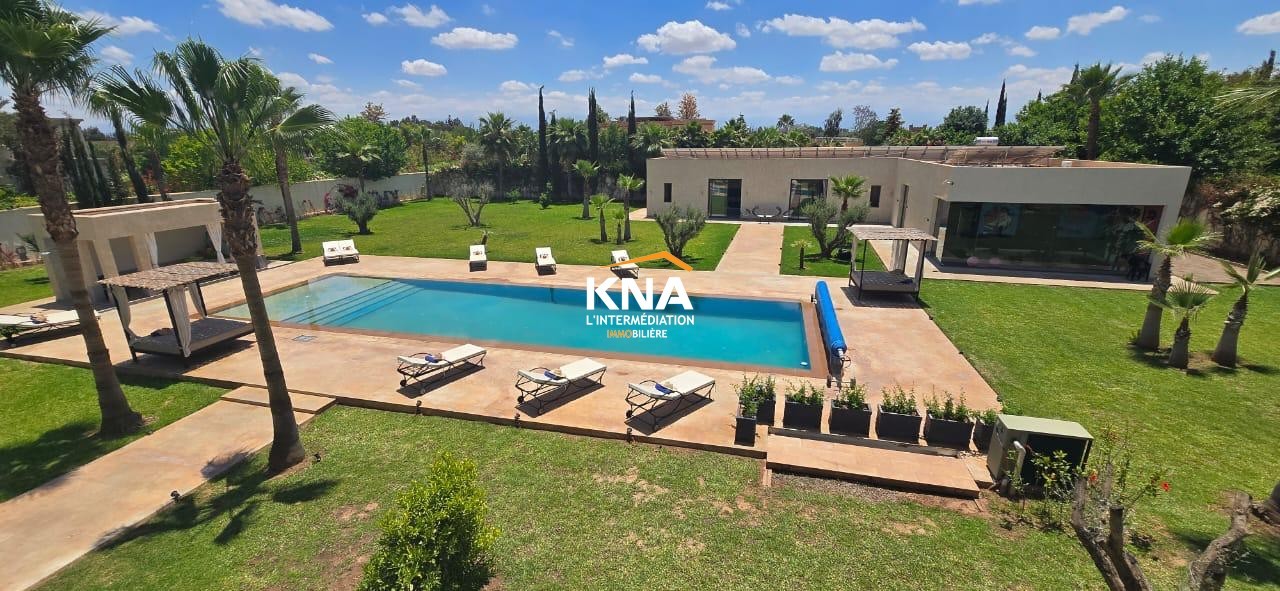
In 2025, a crucial question still arises for every savvy investor: should you prioritize the authentic charm of a riad in the heart of the Medina, or opt for the contemporary comfort of a villa in Marrakech’s residential districts? This decision, far from trivial, can directly influence the profitability and long-term sustainability of your real estate project. Let’s shed light on the advantages and drawbacks of these two investment opportunities to guide your decision.
A Real Estate Market on the Rise in 2025
The Moroccan property sector shows remarkable growth, with Marrakech recording a moderate 3% increase in Q1 2024, while certain neighborhoods have seen property prices per square meter double in just two years.
Buyers are now split between European investors (35%)—mainly French and Belgian nationals seeking a sunny second home, Moroccan expatriates (40%) aiming to maintain a family heritage, and an emerging clientele from the Gulf and Sub-Saharan Africa (25%). This diversification ensures market stability despite international economic fluctuations.
Investing in a Riad: Authenticity and Cultural Heritage
The undeniable strengths of a traditional riad
Buying a riad in Marrakech represents far more than a financial investment—it is the acquisition of a piece of history. Located in the heart of the Medina, a UNESCO World Heritage site, these traditional homes enjoy an exceptional location just minutes from Jemaa el-Fna Square and the souks.
Tourism appeal is their main competitive advantage. A renovated 4-bedroom riad rented on a short-term basis (Airbnb) can generate 6% to 8% net annual rental yield, with an average nightly rate reaching 700 MAD in Marrakech—the highest in Morocco. Travelers are seeking this immersive and authentic experience that only a riad can provide.
The challenges to anticipate
However, buying a riad in Marrakech requires a methodical approach. Maintenance costs are significant: expect 3% to 5% of the property’s value annually to preserve the architectural features (tadelakt, zellige tiles, woodwork). Renovation in the Medina is subject to strict regulations to maintain architectural authenticity.
Accessibility is another challenge: narrow alleys limit vehicle access, complicating deliveries and moves. Finally, property management requires strong local expertise to meet the high service expectations of an international clientele.
Investing in a Villa: Comfort and Modern Living
The appeal of high-end residential districts
Contemporary villas in Marrakech stand out for their modern design and premium amenities. Located in sought-after districts such as the Palmeraie, Hivernage, or Guéliz, they offer space, privacy, and security. A 300 m² villa with pool and garden perfectly matches the expectations of expatriate families and European retirees seeking comfort.
The long-term rental market is especially attractive: a furnished 4-bedroom villa rents for 15,000 to 25,000 MAD per month, depending on the district, generating a stable 6% to 8% annual return. Demand comes mainly from expatriates, international executives, and Moroccan expatriates during extended stays.
The limits of villa investment
The main drawback lies in the entry ticket: expect 3 to 6 million MAD for a quality villa in a desirable district, compared to 1.5 to 3 million MAD for a renovated riad in the Medina. Distance from the historic center may also reduce tourist appeal, although districts like Hivernage compensate with proximity to luxury hotels and golf courses.
Villa vs Riad in 2025: A Numerical Comparison
Average prices per district
Riad Medina: 9,000 to 15,000 MAD/m² (depending on renovation)
Villa Palmeraie: 8,000 to 18,000 MAD/m²
Villa Hivernage: 10,000 to 20,000 MAD/m²
Villa Guéliz: 7,000 to 15,000 MAD/m²
Estimated rental yields
Riad short-term rental: 6% to 8% net annually
Villa long-term rental: 5% to 7% net annually
Villa short-term rental: 6% to 9% net annually (depending on district)
These figures confirm that the choice between villa and riad depends as much on your investor profile as on your long-term objectives.
Investor Profiles and Opportunities in 2025
Each property type suits different strategies. Riads attract investors seeking long-term capital appreciation and attractive short-term rental yields. Villas are better suited for buyers looking for stable rental income and occasional personal use.
European retirees generally opt for villas offering comfort and easy maintenance, while young entrepreneurs focus on riads for their immediate profitability potential. Moroccan expatriates often diversify by purchasing both types depending on family needs.
Practical Advice and Essential Precautions
Whatever your choice, some verifications are crucial. Title deed validation is key: ensure the property has a definitive title deed or a valid building permit. Local taxation must also be considered: registration fees (6%), VAT (20% on new properties), and income tax on rental earnings.
Partnering with an experienced professional like KNA Immobilier is essential to secure your acquisition. Our in-depth knowledge of the local market, privileged relations with local authorities, and strong regulatory expertise ensure a safe and profitable investment.
So, Villa or Riad? Make the Right Choice with KNA
Marrakech real estate offers exceptional opportunities in 2025, whether you choose the authenticity of a riad or the modernity of a villa. Each option presents unique benefits depending on your profile and investment goals.
Still hesitating between the two? Contact KNA Immobilier today for a free personalized study of your project. From property search to signing, including administrative procedures and rental management, our expert advisors will guide you every step of the way. Because your investment deserves the best guidance, trust KNA’s expertise to turn your Marrakech real estate ambitions into reality.
Sources and References
Marché Immobilier au Maroc 2025 - NeroLink Media
Évolution des prix immobiliers Marrakech - Médias24
Indice des prix des actifs immobiliers - Bank Al-Maghrib
Quartiers rentables Marrakech 2025 - Luxurious Properties
29 September 2025
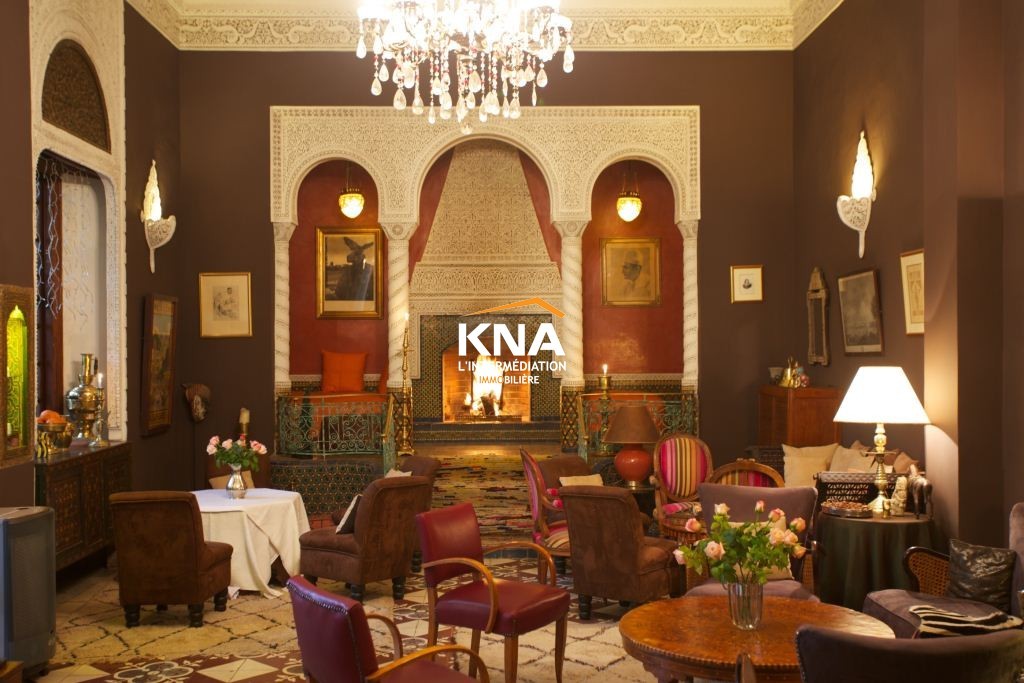
Renting a riad for the long term in Marrakech represents a unique opportunity to experience Moroccan authenticity on a daily basis. These traditional homes, with their typical architecture and central patios, are increasingly attracting expatriates and Moroccans looking for an exceptional living environment.
Why Choose a Riad for Long-Term Rent?
The Advantages of the Traditional Riad
Renting a riad offers an incomparable real estate experience in Marrakech. These traditional houses are distinguished by their authentic architecture with interior courtyards (sahn), fountains, and often terraces with views of the Atlas Mountains or the city’s minarets.
Privacy is one of the main assets: unlike modern apartments, riads offer rare tranquility in the heart of the medina. The thick walls provide natural soundproofing and welcome freshness during Marrakech summers.
An Attractive Rental Investment
For owners, long-term rental of riads offers several advantages:
Stable and regular rental income
Less turnover than seasonal rental
Simplified maintenance
Tenants often careful and respectful of heritage
Riad Rental Prices in Marrakech in 2025
Price Ranges by Neighborhood
Rental prices for riads vary considerably depending on location and standing:
Historic Medina (Bab Doukkala, Mouassine):
Riad with 2-3 bedrooms: 8,000 to 15,000 MAD/month
Riad with 4-5 bedrooms and pool: 15,000 to 25,000 MAD/month
Restored luxury riad: 25,000 to 40,000 MAD/month
Residential Areas (Targa, Route de Fès):
Modern riad with traditional style: 12,000 to 20,000 MAD/month
Villa-riad with garden: 18,000 to 35,000 MAD/month
Criteria Influencing Prices
The rental price of a riad depends on several factors:
Renovation status and quality of restoration
Presence of a pool and modern equipment
Accessibility (proximity to parking, width of alleys)
Surface area and number of bedrooms
View (terrace with panorama of the Atlas)
Practical Tips for Renting a Riad
Before the Visit
Check accessibility: some riads in the medina can only be reached on foot through narrow alleys. Make sure this fits your lifestyle, especially for deliveries and moving.
Inquire about recent renovations. A poorly renovated riad may present humidity or electrical installation issues.
Key Points During the Visit
Heating system: essential for Marrakech winters
Water pressure and hot water in all rooms
Condition of the terrace and waterproofing
Soundproofing if near a mosque or artisans
Security: quality of locks and discretion of the entrance
Negotiation and Contract
Rent negotiation is common in Marrakech. Do not hesitate to discuss the price, especially for a long-term rental (minimum 12 months). Owners value stability and may agree to significant reductions.
Important clauses to negotiate:
Trial period of 1 to 3 months
Coverage of certain maintenance works
Possibility of personalized fittings
Conditions for early termination
Recommended Neighborhoods for Long-Term Rental
Medina: Guaranteed Authenticity
The districts of Bab Doukkala and Riad Laarous offer the best compromise between authenticity and modern amenities. Quieter than Jemaa el-Fna, they are still well served.
Peripheral Areas: Modern Comfort
Targa and the Route de Fès offer recent riads combining traditional charm and contemporary comfort, with easier car access.
Services and Expenses to Consider
Common Charges
Electricity: 200 to 500 MAD/month depending on surface area
Water: 100 to 200 MAD/month
Internet/telephone: 300 to 500 MAD/month
Guard service (if desired): 1,500 to 2,500 MAD/month
Optional Services
Weekly cleaning: 800 to 1,200 MAD/month
Gardening and pool maintenance: 500 to 1,000 MAD/month
Concierge: tailor-made services
Renting a riad long-term in Marrakech offers a unique lifestyle experience, combining architectural heritage and modern comfort. With attractive prices compared to European standards and exceptional quality of life, this option is increasingly appealing to demanding tenants.
To succeed in your search, consider the support of a specialized real estate agency that can guide you to the riad perfectly suited to your needs and budget.
22 September 2025
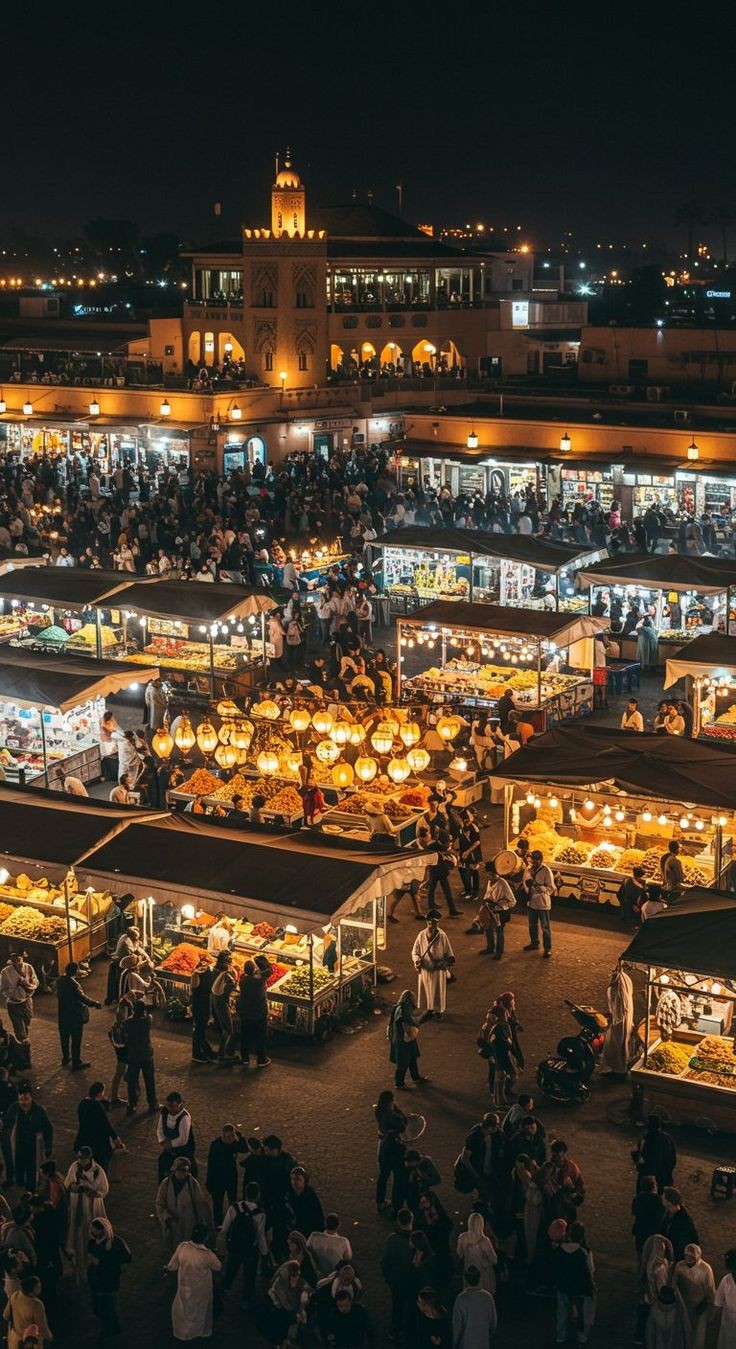
This shift in the rental market is taking place against a backdrop of exceptional tourism performance. Morocco has posted record-breaking numbers that are redefining the rules of real estate investment.
Read for better context: “Is Morocco Really Breaking Tourism Records in 2025?”
With 28.7 million overnight stays recorded in 2024 (+12% vs 2023) and 17.4 million tourists, Morocco is undergoing a deep transformation of its rental market. The surge in tourism demand is redefining the balance between traditional rentals and short-term vacation rentals, creating new economic opportunities — but also unprecedented social tensions.
The observed increase in the average length of stay is intensifying pressure on rental supply and radically transforming landlords’ strategies.
Positive Impacts: The Golden Age of Short-Term Rentals
Exceptional Rental Yields
Short-term rental profitability has reached historic levels in 2025. In prime tourist destinations like Marrakech, Agadir, and Essaouira, annual yields frequently exceed 12–15%, compared to 4–6% for long-term leases. This performance is supported by strong occupancy rates, fueled by MAD 54 billion in tourism revenue in the first half of 2025 (+9.6%).
Diversified Rental Income
The internationalization of Moroccan tourism ensures a diverse clientele year-round. French visitors increased by 14% in June 2025, alongside growing numbers from the UK, the U.S., and the Middle East — allowing property owners to stabilize revenue across all 12 months.
Professionalization of the Sector
The tourism boom is accelerating the professionalization of short-term rentals. The emergence of specialized agencies, concierge services, and tech platforms is enhancing service quality while optimizing returns.
Negative Impacts: The Challenges of Tourism-Driven Gentrification
Displacement of Traditional Tenants
The large-scale conversion of housing into short-term rentals is causing a shortage of long-term rental supply. In the medinas of Marrakech and Fez, many long-term residents are being pushed out in favor of more profitable tourist clientele. This “tourist gentrification” is fragmenting local communities.
Rising Residential Rents
The demand surge from tourism is also driving up prices for traditional rentals. Landlords are increasingly setting prices based on the potential profitability of short-term leasing, making it harder for Moroccan tenants to keep up with rent increases.
Erosion of Urban Social Fabric
The transformation of entire neighborhoods into tourist hubs is eroding traditional social networks. Local shops are disappearing in favor of tourist businesses, schools are emptying, and community ties are weakening.
Sector Analysis: How Different Property Types Are Evolving
Traditional riads remain the most sought-after properties, with occupancy rates nearing 85% in medinas and annual yields of 15–20%.
Modern apartments attract international tenants looking for comfort, but they also divert high-quality inventory away from the long-term rental market.
High-end villas create additional supply without directly impacting traditional housing stock.
Regulation & Outlook 2025–2030
In response to growing social tensions, some Moroccan cities are exploring regulatory solutions:
Marrakech is considering neighborhood quotas
Rabat is introducing differentiated tax measures
With tourism projected to reach 26 million visitors by 2030, Morocco will need to double its accommodation capacity, driving an even more radical transformation of the rental market.
Innovative Solutions: Balancing Tourism with Housing Needs
New approaches are emerging to balance rental profitability and housing access:
Flexible leases
Mixed seasonal/annual rental models
Shared ownership/co-housing models
The geographic diversification of tourism (+22% growth in February 2025) is also opening new opportunities in less saturated areas.
Conclusion: A Rental Market Transformed — But at What Cost?
Morocco’s tourism boom is irreversibly transforming the national rental market. While it’s generating exceptional economic opportunities, it’s also creating major social challenges.
The future of the sector will depend on Morocco’s ability to balance tourism-driven profitability with social cohesion, through smart regulation and innovation in rental models.
Smart Investing: Sell or Rent in 2025?
This rental market transformation raises a key question for investors:
Should you focus on buy-to-let income or capitalize on resale value in this booming tourism context?
Further Reading:
“Is the Tourism Boom Boosting Real Estate Sales?”
→ Zone-specific valuations, optimal timing, and resale strategies in a hot foreign market.
“Is Morocco Really Breaking Tourism Records in 2025?”
→ The reference analysis guiding your real estate decisions.
Need a Personalized Investment Strategy?
Our experts will assess your situation and guide you toward the real estate approach best suited to your goals.
29 August 2025
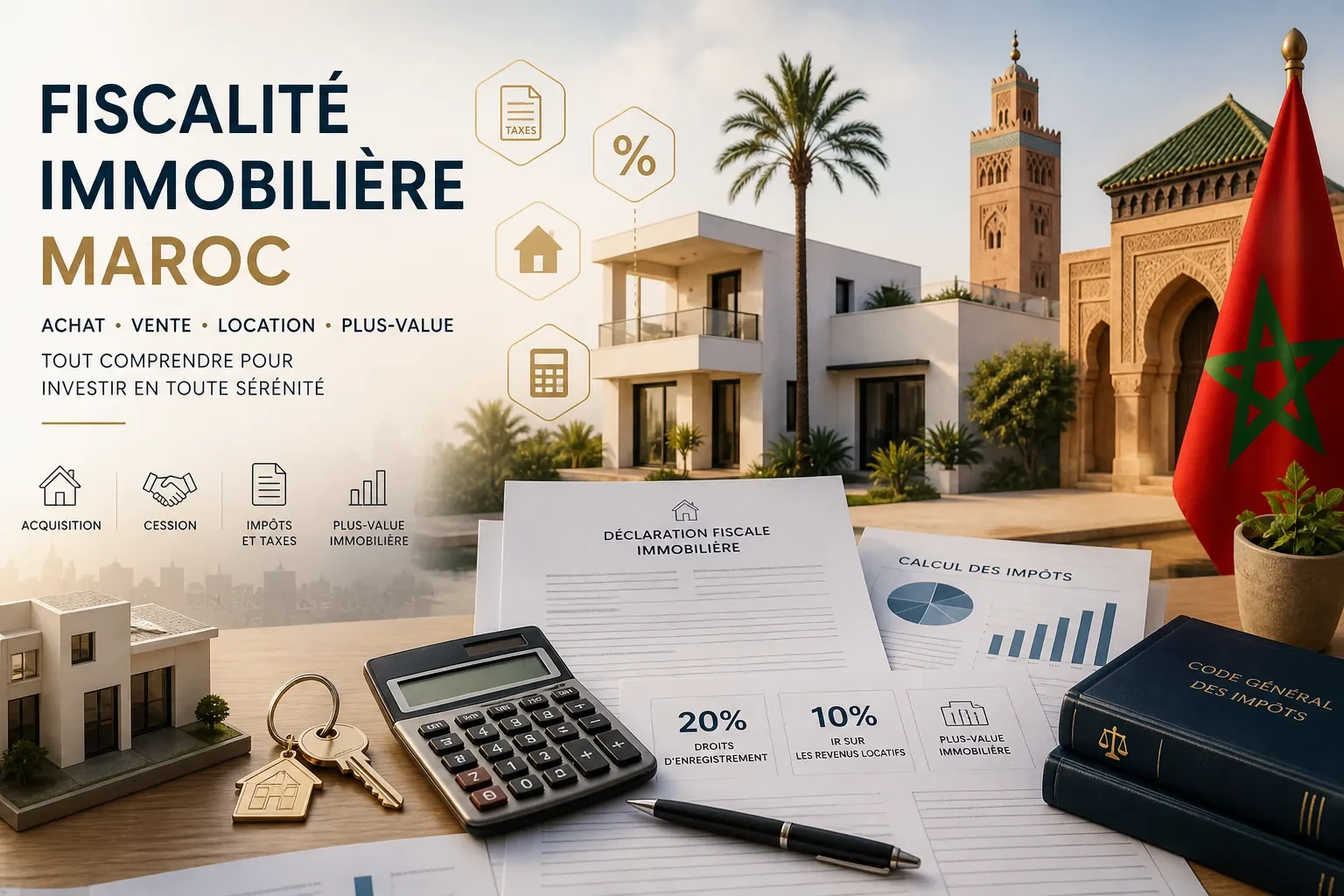
Investing in property within the Kingdom remains a premier wealth-building strategy. However, achieving success in your project requires a deep understanding of real estate taxation in Morocco. By 2026, the Moroccan tax administration has fully transitioned to digital platforms, making the management of your Moroccan property tax more transparent yet requiring stricter compliance.
Whether you are planning a luxury property purchase in Marrakech or already hold a portfolio, this guide explains how to optimize your costs and stay compliant with the General Tax Code.
Taxation at the Time of Acquisition: Securing Your Investment
Buying property triggers several mandatory levies upon signing the deed. It is crucial to anticipate these costs to calculate your actual cost price and return on investment.
Registration Fees and Land Registry
The buyer must pay registration fees, generally set at 4% for built properties. Additionally, registration with the Land Registry (1.5% + fixed fees) guarantees your title deed. If you utilize the services of an estate agency in Marrakech, your consultant will help you accurately estimate these notary fees and administrative costs.
Value Added Tax (VAT) and State Incentives
For new builds, VAT is often included in the developer's price. In 2026, direct housing aid schemes have replaced some older exemptions, favoring taxpayers acquiring their primary residence.
Holding Property: Annual Local Taxes
Once you become an owner, real estate taxation in Morocco imposes two local taxes based on the property’s rental value, which is reassessed every five years by the census commission.
Residential Tax (TH): This applies to both primary and secondary residences. Owners benefit from a 75% tax relief (abatement) for their primary home.
Municipal Service Tax (TSC): This Moroccan property tax funds urban services such as street lighting and sanitation. The rate varies between 6.5% and 10.5% depending on the property's location.
For those looking to generate income through real estate rentals in Marrakech, these taxes remain the responsibility of the landlord unless otherwise specified in the lease agreement.
Tax on Rental Income: Optimizing Your Investment Yield
Renting out your property generates rental income subject to tax. In 2026, the flat-rate system is the standard to simplify the process for taxpayers.
Tax Thresholds and Gross Income
The tax is calculated based on the annual rental income received:
Total Exemption: If your annual rental income is below 30,000 DH.
10% Rate: For income between 30,001 DH and 120,000 DH.
15% Rate: For income exceeding 120,000 DH.
If you manage a villa rental in Marrakech, remember that you can deduct certain deductible charges, such as syndicate fees or insurance premiums, to reduce your taxable income.
Reselling and the Real Estate Profit Tax (TPI)
Real estate taxation in Morocco applies a tax on the capital gain realized when selling a property. This is a major focal point for any investor.
Profit Calculation and Exemptions
The Real Estate Profit Tax (TPI) rate is 20%, with a minimum payment of 3% of the selling price. However, you may qualify for a total exemption if you sell your primary residence after a 5-year holding period (as per the 2026 Finance Law updates).
Before selling, consult experts like My Private Villa Marrakech to evaluate the market value of your asset and anticipate the fiscal impact.
Specific Status for Moroccans Residing Abroad (MRE)
Morocco offers an attractive framework for its diaspora. MREs benefit from the 75% abatement on the Residential Tax for their property in the country, even if they reside abroad. Furthermore, international tax treaties prevent double taxation on income derived from real estate taxation in Morocco.
FAQ: Frequently Asked Questions on Moroccan Property Tax
How do I declare my rental income in 2026?
You must file your declaration before March 1st each year through the "SIMPL" portal of the General Tax Administration.
Can I deduct mortgage interest?
Yes, under certain conditions, interest on your mortgage is deductible from your total taxable income when acquiring a primary residence.
What is the tax for a secondary residence?
Unlike a primary residence, you do not benefit from the 75% abatement on the Residential Tax for a second home.
Conclusion: Personalized Guidance for Your Assets
Navigating real estate taxation in Morocco requires precision. Whether you are looking to invest or rent out your property, seeking professional advice prevents costly reassessments. For any specific questions regarding your project, do not hesitate to contact our experts.
26 August 2025
In our previous article on the surge in tourism statistics in Morocco in 2025, we highlighted an exceptional dynamic driven by a record influx of visitors. This tourism boom now appears to be having direct repercussions on the real estate market, especially during this summer season marked by the massive arrival of tourists.
With 17.4 million visitors recorded in 2024 and ambitious projections of 26 million by 2030, the Kingdom strengthens its status as Africa’s leading tourist destination, which in turn supports a rapidly growing real estate demand.
For deeper insight: “Is Morocco Really Breaking Tourism Records in 2025?”
The Knock-on Effect of Tourism Records on Real Estate
Morocco’s exceptional tourism performance—with MAD 54 billion in travel revenue in the first half of 2025 (+9.6%)—has direct consequences on the national real estate market. This momentum is creating unprecedented appeal for foreign investors.
According to Bank Al-Maghrib, which lowered its key interest rate by 25 basis points in March 2025 (bringing it down to 2.25%), favorable monetary conditions are now perfectly aligned with tourism growth to stimulate real estate acquisitions.
Positive Impacts: Multiplying Investment Opportunities
Strong Foreign Demand
A favorable investment climate has led to 5% of tourists investing in the country’s economy and 1% settling permanently, according to the Ministry of Tourism. This reveals significant potential: out of 17.4 million annual visitors, nearly 870,000 become investors, and 174,000 choose to live in Morocco.
Accelerated Property Appreciation in Tourist Areas
Tourist zones are seeing significant price increases, particularly in imperial cities and coastal destinations. This appreciation benefits current property owners and offers substantial capital gains opportunities for savvy investors.
Attractive Rental Yields
Morocco’s 2025 property market presents a rare combination: foreigners can legally own property, benefit from favorable tax conditions, and earn strong rental yields in tourist areas. Yields are boosted by the 28.7 million overnight stays recorded in 2024, a 12% increase over 2023.
Negative Impacts: The Flip Side of the Tourism Boom
Property Inflation and Local Exclusion
The strong foreign demand driven by tourism is pushing up real estate prices, making property increasingly unaffordable for many Moroccans. In key tourist zones, prices have reached levels inaccessible to the average local buyer, creating market segmentation.
Speculation and Localized Bubbles
Anticipation around the 2030 FIFA World Cup is fueling speculative behavior. Some investors are purchasing properties solely for short-term appreciation, without regard for local market stability. This raises concerns about localized real estate bubbles.
Growing Sectoral Dependence
As the real estate market becomes more closely tied to tourism cycles, it develops structural dependency. Any tourism shock—be it health, geopolitical, or economic—can directly affect real estate prices, increasing the sector’s vulnerability.
Regional Analysis: Comparing Market Performance
Marrakech-Safi: Strongest growth, fueled by its status as a top destination.
Casablanca-Settat: More stable indirect growth, less affected by seasonal tourism trends.
Agadir and Tangier: Capitalizing on diversified tourism flows, offering more affordable prices and significant growth potential.
2025–2030 Outlook: Toward a Maturing Market
The forecast of 26 million tourists by 2030 and MAD 120 billion in tourism revenue outlines a promising future for Morocco’s real estate sector. The expected 4.6% national economic growth in 2025 provides a favorable macroeconomic environment for long-term real estate investment.
Morocco’s tourism boom is undoubtedly a key driver of real estate growth, offering exceptional opportunities and attractive returns. However, this positive momentum comes with structural risks that must be carefully managed.
The sector’s future will hinge on its ability to balance international appeal with local affordability, and to strike the right equilibrium between economic development and heritage preservation.
Buying vs Renting in 2025: What’s the Best Move for Investors?
As the real estate sales market evolves, many investors are considering the rental option, especially given the surging tourist demand.
For deeper insight: “Is Morocco’s Tourism Boom Reshaping the Rental Market?” – Comparative returns, regulation updates, and optimal strategies based on your investment goals.
For further reading: “Is Morocco Really Breaking Tourism Records in 2025?” – A complete analysis that sheds light on today’s key real estate issues.
18 August 2025
More and more misleading information is circulating on social media regarding a decline in tourist arrivals to Morocco in 2025. However, official statistics paint a radically different picture. In 2024, Morocco recorded a new tourism milestone with 17.4 million visitors, a 20% increase compared to 2023, according to figures released by the Ministry of Tourism in January 2025.
This record performance is part of a sustained growth trend that continues into 2025. By the end of June 2025, travel-generated revenue reached MAD 54 billion, marking a +9.6% increase over the same period in 2024. These figures, published by the Observatoire du Tourisme (Tourism Observatory), the official reference institution, strongly contradict the pessimistic narratives circulating on digital platforms.
Breakdown by Source Markets: Broad-Based Growth
A detailed analysis of arrivals by country of origin reveals a generally positive trend. According to the Tourism Observatory, as of June 2025:
France: 485,000 arrivals in June 2025, a 14% increase compared to June 2024 (424,000 arrivals).
France, a traditional stronghold for Moroccan tourism, continues to grow despite European economic challenges. This growth is also accompanied by a notable geographical diversification, with strong gains from other key markets.
In February alone, Morocco welcomed 1,396,177 tourists, up from 1,147,999 a year earlier, representing a 22% increase. British visitors stand out as a driving force in this diversification of the tourism base.
Economic Impact: Tourism as a National Growth Engine
The tourism sector reaffirms its role as a key economic pillar. Tourism currently represents 7% of Morocco’s GDP, outperforming many other strategic sectors. This significant share is bolstered by strong multiplier effects on employment and investment.
Foreign currency revenues from non-resident travel exceeded MAD 45.12 billion by the end of May, an 8.5% year-on-year increase, according to the Tourism Observatory. These inflows contribute substantially to Morocco's trade balance and help fund strategic imports.
Accommodation Capacity: Record Overnight Stays and Hotel Optimization
Tourism infrastructure is effectively supporting this sustained growth. In 2024, Morocco recorded 28.7 million overnight stays, a 12% increase compared to 2023.
The growth in overnight stays, which outpaces the growth in arrivals, signals an increase in average stay duration—a positive indicator of visitor satisfaction and the appeal of Moroccan destinations. The improved hotel occupancy rates directly enhance the sector’s profitability and validate ongoing investments in hospitality capacity.
Projections for 2025–2030: Aiming for 26 Million Tourists
Morocco’s strategic ambitions are grounded in strong fundamentals. The country aims to welcome 26 million tourists by 2030, a goal supported by preparations for the FIFA World Cup 2030. According to projections by Sogecapital Gestion, the asset management arm of Société Générale Group, tourism could generate up to MAD 120 billion in revenue by 2030, thanks to increased hospitality capacity.
These projections come in a favorable macroeconomic context. The national economy is expected to grow by 4.6% in 2025, according to the Ministry of Economy, creating an environment conducive to tourism investment.
Nuances and Challenges: Between Perception and Reality
Despite these undeniable quantitative achievements, the sector faces important qualitative challenges. Negative perceptions on social media contrast sharply with strong tourism indicators. This disconnect between perception and statistical reality highlights the critical importance of managing Morocco’s image as a destination.
Industry professionals also point to significant seasonal variations and emphasize the need to analyze trends over longer periods to avoid drawing premature conclusions from isolated data points.
Conclusion: A Nuanced but Unquestionable Success Story
A factual analysis of official data leaves no doubt: Morocco's tourism sector is thriving in 2025. With 17.4 million visitors in 2024, MAD 54 billion in H1 2025, and continued growth across all key indicators, Morocco is solidifying its position as Africa’s top tourism destination.
That said, this remarkable performance comes with strategic challenges: managing digital reputation, maintaining service quality amid rising volumes, and ensuring balanced geographical distribution of tourist flows. The sector’s future success depends on turning quantitative growth into sustainable qualitative development—a goal at the heart of Morocco’s tourism strategy for 2025–2030.
Major infrastructure investments in hotels and transport, coupled with the expected benefits of the 2030 FIFA World Cup, put Morocco on track for exceptional tourism growth—provided the balance between economic development and the preservation of destination authenticity is maintained.
Impact on Real Estate: An Opportunity Worth Exploring?
This exceptional tourism momentum is having a significant impact on Morocco's real estate market. Investors are right to question both opportunities and risks.
For deeper insight: “Is the tourism boom boosting property sales?” – Insights on pricing trends, regional opportunities, and investment strategies in response to growing foreign demand.
For deeper insight: “Is the tourism surge reshaping the rental market?” – Explore comparative returns, evolving regulations, and optimal strategies based on your investor profile.